Everything to know before you travel
A safari should feel effortless. This guide covers the practical side of a trip with us: when to go, visas and health, what to pack, travelling with children, and the questions families ask us first.
Anything it does not answer, ask your planner on WhatsApp.
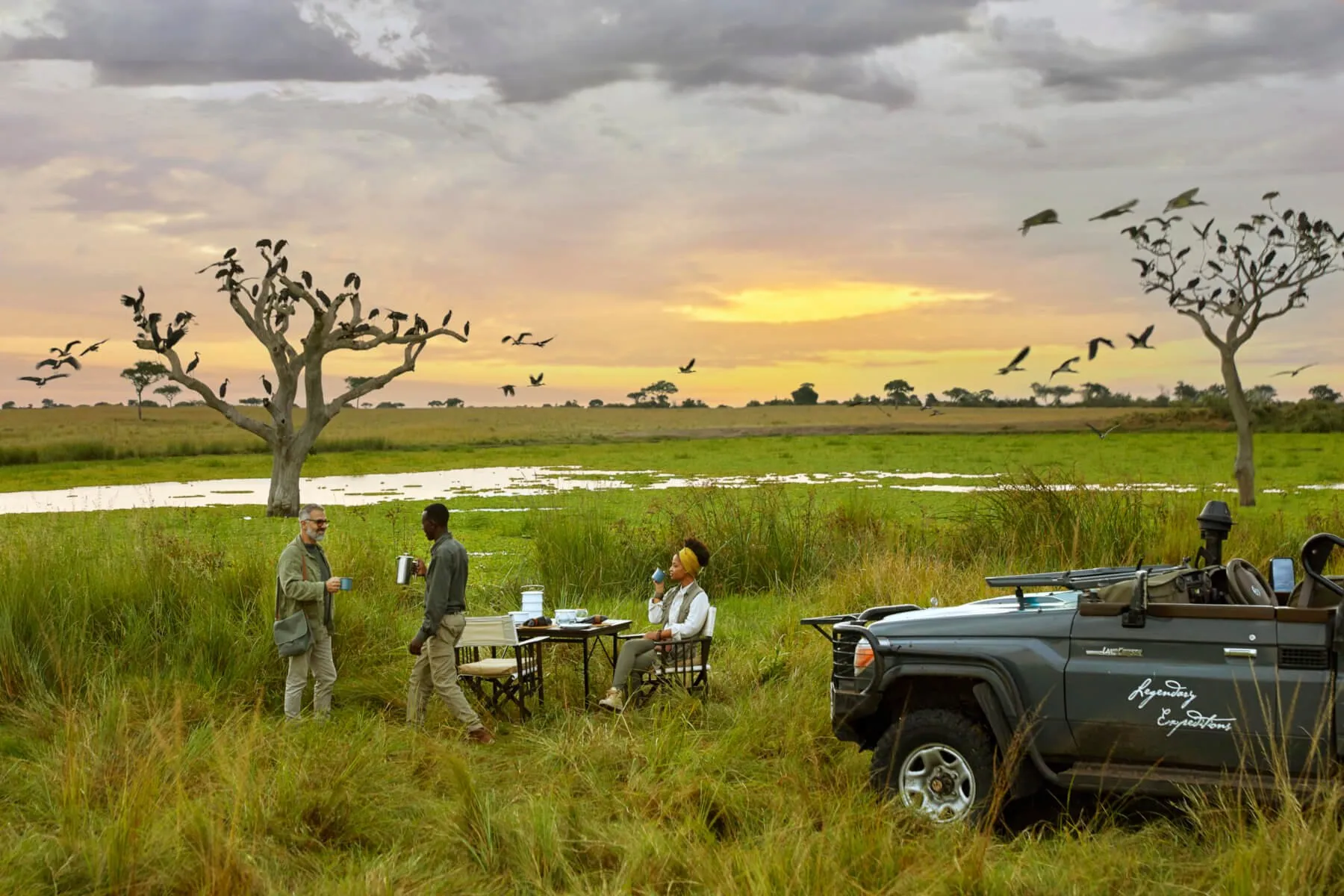
When to travel, season by season
Tanzania is a year-round safari destination. The season you choose changes the trip more than anything else you will decide.
December – March
Warm and green, with excellent wildlife viewing. It includes the calving season in the southern Serengeti, when thousands of young are born in a few weeks.
April – May
The long rains. The landscape is at its most lush and there are far fewer visitors. Rainfall varies a lot from year to year, and some camps close.
June – October
The main dry season: clear skies, short grass and the animals gathered near water. It is also the peak for the migration in the northern Serengeti, and the busiest time to book.
November – early December
The short rains refresh the landscape. Wildlife stays, visitor numbers fall, and the skies are some of the best of the year.
Average temperatures
| Months | Daytime | Night |
|---|---|---|
| January – March | Around 28°C | Around 14°C |
| April – June | Around 23°C | Around 12–14°C |
| July – September | Around 25°C | Around 12°C |
| October – December | Around 27°C | Around 14°C |
Visas, vaccines and insurance
Where an answer depends on your nationality or your doctor, we say so rather than answer for them.
Do I need a visa?
Most nationalities, including Saudi citizens, need a visa for Tanzania. We recommend applying online through the official Tanzania immigration e-visa site before you travel, as early as possible.
Your passport needs at least six months’ validity and blank pages for immigration. We can guide you through the process, but approval and entry are decisions for the Tanzanian authorities.
Will I need a yellow fever certificate?
It depends on your route. If you are travelling from, or have transited for some time through, a country with yellow fever transmission, you may be asked for a valid certificate on arrival. Requirements change, so check the latest official guidance before you fly.
Do we need to take anything for malaria?
Malaria occurs in Tanzania, and the right prevention depends on each person, especially for children. Speak to a travel-health clinic well before you fly, and keep any medication in your hand luggage.
What should our travel insurance cover?
We ask every guest to hold comprehensive cover from the day they book. Check that it includes the activities on your trip, such as balloon flights and walking safaris.
- Medical treatment
- Emergency evacuation
- Trip cancellation or interruption
- Lost or delayed luggage
Is there a separate insurance rule for Zanzibar?
Zanzibar has its own entry insurance requirement, and the rules have changed more than once. We tell you what applies to your trip in your final travel documents.
What to pack, and why less is better
Most lodges do laundry, so a small, well-chosen wardrobe is all you need.
Luggage
- One soft-sided bag per person. Hard suitcases do not fit light aircraft or safari vehicles.
- Around 15 kg per person, including hand luggage, on the flight between the Serengeti and Zanzibar.
- A small daypack for the vehicle: passport, medication, sunglasses, camera, water bottle and a warm layer.
Clothing
- Light trousers and long-sleeved shirts
- A fleece or sweater for early mornings
- A light rain jacket
- Comfortable closed walking shoes
- Sandals for the lodge and the beach
- A wide-brimmed hat for everyone
- Swimwear for the pool and the sea
- A scarf or shawl
Khaki, beige, olive, brown and soft grey work best in the bush. Avoid very bright colours, and leave camouflage-pattern clothing at home: it is associated with the military in Tanzania.
Worth bringing
- Binoculars, one pair per person if you can
- Sunscreen and lip balm with SPF
- Insect repellent
- Camera, spare batteries and memory cards
- Power bank and universal adapter
- A refillable water bottle
- Prescription medication, in your hand luggage
- A small first-aid kit
Travelling with kids, at their pace
Most of the families we plan for travel with children. A private trip is the easiest way to do it, because nothing runs to anyone else’s timetable.
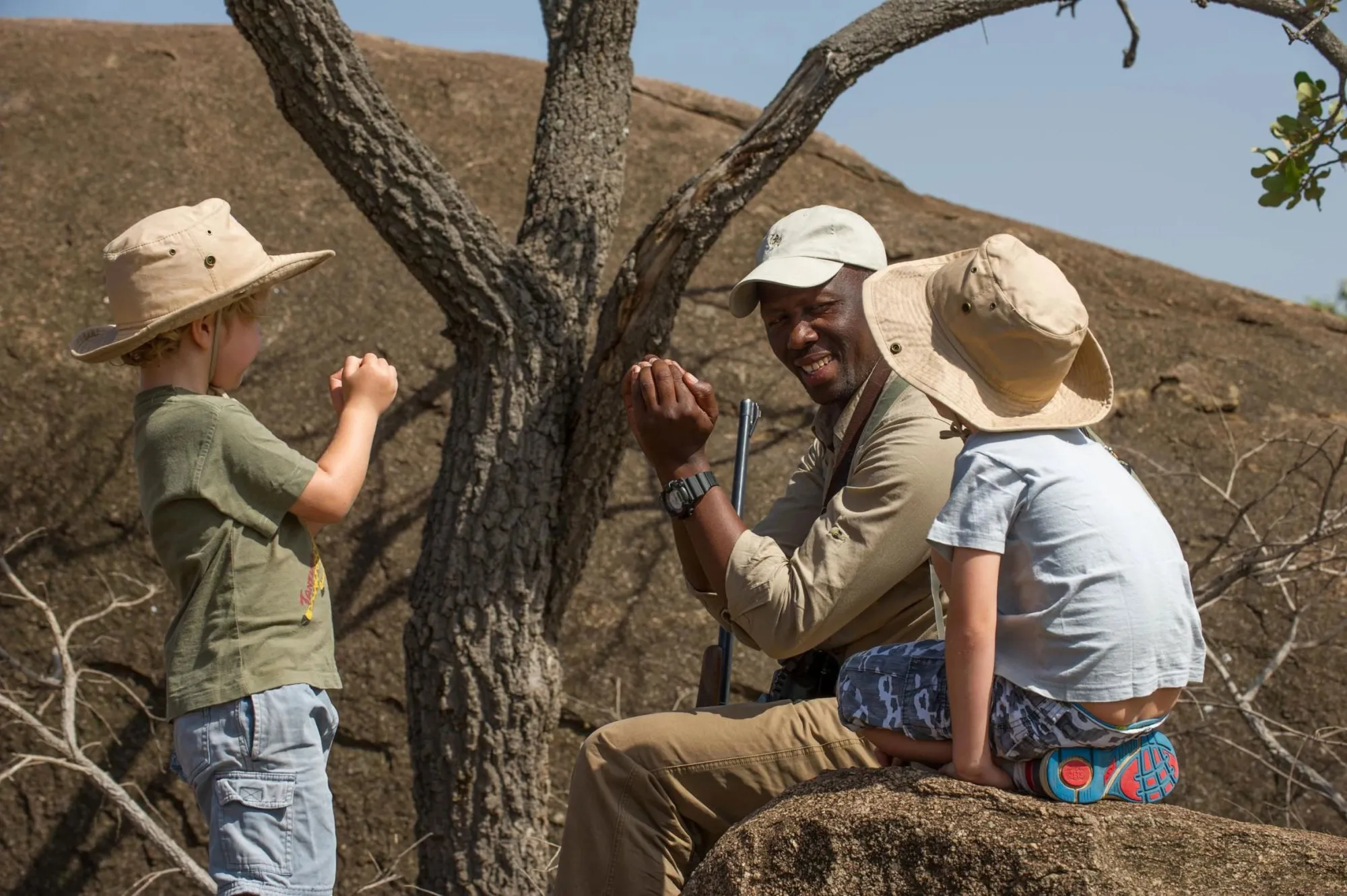
With your own vehicle and guide, you stop when someone needs to, go back to the lodge for a rest in the middle of the day, and stay with the elephants for as long as the children want to watch them. Our Slow Safari is written for families: fewer moves, shorter drives, and more nights in each place.
Good to know
- We choose family rooms or connecting tents, and lodges with a pool where we can.
- Most balloon operators take children from about seven years old.
- Walking safaris in big-game areas are usually for ages eight and up; gentler nature walks can take younger children.
- Long drives are broken up with picnic stops, and your guide carries snacks and water.
- Tell us about meals, including halal and children’s food, and we confirm each lodge in writing.
FAQs: what families ask us first
Can the days be planned around prayer times?
Yes. Tell your planner, and your guide will plan stops around prayer times. Many lodges can also set aside a quiet space.
Is halal food available?
Many lodges can prepare halal meals with notice. Tell us when you plan, and we confirm it with each lodge in writing before you book.
What money should we bring?
The currency is the Tanzanian shilling, and US dollars are widely used in tourism. Cards work at most lodges. Bring some recent, undamaged small US dollar notes for tips and small purchases; old or torn notes are often refused.
How does tipping work?
Tipping is not compulsory, but it is customary for good service. Your planner can give you current guidance for your guide and the lodge teams.
Can I bring a drone?
Not without the right permits. Drone rules in Tanzania are strict, so ask us before you pack one.
Will we have phone signal and Wi-Fi?
Often, but not everywhere. Most lodges have Wi-Fi, and coverage is patchy in remote areas. Your planner can always be reached through your guide.
How do we get over the jet lag?
Tanzania is on East Africa Time (GMT+3), the same as Riyadh, so for most of our guests there is none. From further away, drink plenty of water on the flight, get outside in daylight when you land, and keep the first afternoon free.
Travel light. Travel comfortably. Leave room for Tanzania.
Anything this page did not answer, your planner will, usually within the hour.